Last Updated October 27, 2026
Quick answer: Seasonal depression, also called seasonal affective disorder (SAD), is depression that returns at the same time each year, usually starting in late fall and lifting in spring. It’s treated with light therapy, talk therapy, and antidepressants. For people in Toronto and Ontario whose winter depression has not improved after at least two antidepressants, IV psychedelic therapy may help.
In Toronto and across Ontario, the shorter days of late fall bring a change in mood for many people. For some, the change goes further: sleep, appetite, energy, and interest in seeing friends shift for months at a time, and work and family life become harder to manage until spring. This article explains how seasonal depression differs from the winter blues, the available treatments, and when psychedelic therapy may be considered.
In this guide
- What is seasonal affective disorder?
- When does seasonal depression start?
- Seasonal depression symptoms
- What does research say about psychedelic therapy for seasonal depression?
- What is the best treatment for seasonal depression?
- What if standard treatments don’t help seasonal depression?
- Can winter make existing depression worse?
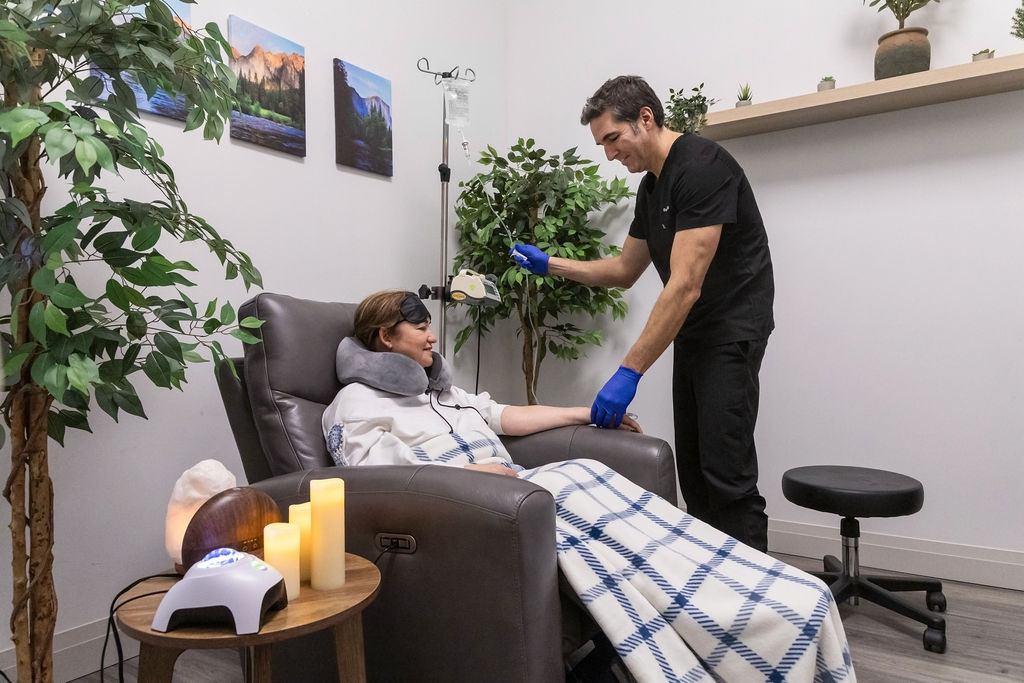
- Is IV psychedelic therapy an option for seasonal depression in Toronto and Ontario?
- Frequently asked questions
What is seasonal affective disorder?
Seasonal affective disorder is a type of depression with a recurring seasonal pattern. Most people with SAD have the winter pattern, where depression starts as daylight hours shorten and improves as they lengthen again. A smaller group has a summer pattern, which is less common and less studied.
SAD is not a separate illness from depression. Doctors diagnose it as major depression with a seasonal pattern when depressive episodes occur in the same season for at least two years in a row, and those seasonal episodes are more frequent than episodes at other times of year.
Winter blues or seasonal depression?
Many Canadians feel lower in winter. The Canadian Mental Health Association estimates that about 15% of people experience the winter blues, which may include lower mood, more sleep, more comfort food and more time on screens instead of with friends. These changes can be uncomfortable, but most people are still able to manage work and daily life.
Seasonal depression is more severe, and about 2 to 3% of Canadians are affected. With SAD, the depression makes it hard to work, care for family or keep up with friends for months at a time.
| Winter blues | Seasonal depression (SAD) | |
|---|---|---|
| How common in Canada | About 15% of people | About 2 to 3% of people |
| Effect on daily life | Lower mood, but work and daily life continue | Hard to work, care for family or see friends for months |
| Typical length | Comes and lasts through the winter | About 4 to 5 months, late fall to spring |
| What helps | Daylight, activity and a regular sleep schedule | Light therapy, talk therapy and medication, assessed by a doctor |
When does seasonal depression start?
Winter-pattern seasonal depression usually starts in late fall or early winter. In Ontario, many people notice the first changes in October or November, after the clocks change and the days get noticeably shorter. Symptoms typically last 4 to 5 months and ease in spring as daylight returns.
The timing tends to repeat. If you have felt low every winter for the past two or three years, keep a simple record this fall: the date your sleep, appetite or mood first changed, and how you felt each week. This gives your doctor clear information and makes it easier to start treatment before the worst months.
Not everyone has symptoms every year, and some winters may be milder than others. A mild winter does not mean the pattern is gone, so it can help to plan ahead each fall.
Seasonal depression symptoms
Seasonal depression includes the usual symptoms of depression: low mood most of the day, loss of interest in activities you used to enjoy, trouble concentrating, and feelings of hopelessness or guilt. Winter-pattern depression also tends to bring a specific group of physical symptoms:
- Oversleeping. You may sleep 9 or 10 hours and still wake up tired.
- Carbohydrate cravings. Bread, pasta, and sweets become hard to resist, and weight gain over the winter is common.
- Low energy. Ordinary tasks take more effort.
- Social withdrawal. You cancel plans, avoid calls, and spend more evenings at home.
People often describe it in simple terms. They may say things like:
- “I feel like I’m hibernating.”
- “I’m fine in summer, and then every November I disappear.”
- “I can get through work, but I have nothing left for my family.”
This pattern of oversleeping, overeating, and fatigue is sometimes called atypical depression. It’s the opposite of the insomnia and poor appetite many people associate with depression, which is one reason winter depression is often missed or dismissed as low energy.
What does research say about psychedelic therapy for seasonal depression?
Clinical trials have not yet tested IV psychedelic therapy in people diagnosed specifically with seasonal affective disorder. What research does show is how the treatment affects the symptoms that define winter depression.
Researchers at the US National Institute of Mental Health pooled data from three placebo-controlled trials with 68 hospital inpatients with treatment-resistant depression, including people with bipolar depression. Each person received a single IV infusion and a placebo infusion two weeks apart. The researchers measured winter-type symptoms using questions taken from a symptom scale developed for seasonal affective disorder.
The findings were:
- 26 of the 68 participants (38%) had a high level of winter-type symptoms before treatment.
- One infusion reduced overall depression scores and winter-type symptoms compared with placebo, and the improvement was still present three days later.
- Of the winter-type symptoms, carbohydrate cravings, social withdrawal and fatigue showed the clearest improvement.
- Sleep and appetite changed the least.
These results suggest that the treatment acts on several of the symptoms people with winter depression find hardest to manage.
How psychedelic therapy works in the brain
Most antidepressants act on serotonin, norepinephrine, or dopamine and usually take several weeks to reach their full effect. The medicine used in IV psychedelic therapy works through a different system, called glutamate, which is the brain’s main chemical messenger for learning and forming new connections.
During an infusion, the medicine blocks a receptor on brain cells called the NMDA receptor. This leads to a short rise in glutamate activity and activates a second receptor, called AMPA. Research links this sequence to higher levels of brain-derived neurotrophic factor (BDNF), a protein that helps brain cells grow and form new connections, especially in the prefrontal cortex, the area involved in mood, planning, and decision-making.
Long periods of depression and stress are linked to fewer connections in this part of the brain. In studies of treatment-resistant depression, people can improve within hours to a day after an infusion, much faster than the weeks most antidepressants take.
For seasonal depression, this means the treatment acts on the depression itself rather than on the lack of daylight. Light therapy remains the treatment that targets the effect of shorter days.
What is the best treatment for seasonal depression?
Most people with seasonal depression improve with one or a combination of the following treatments. Starting early in the fall, before symptoms are at their worst, usually gives the best results.
1.) Light therapy
Light therapy is the main treatment for winter-pattern SAD. People sit near a light box that gives off 10,000 lux of bright light for about 30 to 45 minutes, usually soon after waking. Treatment generally continues every day from fall through spring.
2.) Talk therapy
Cognitive behavioural therapy has a version adapted for seasonal depression. It helps people replace negative thoughts about winter with more balanced ones and schedule activities that keep them engaged during the darker months.
3.) Medication
Antidepressant medication is used for seasonal depression the same way it’s used for other types of depression. Some people start medication in early fall, before symptoms appear, and continue through winter. Others, whose depression also returns at other times of year, take it year-round.
4.) Daylight and activity
The Canadian Mental Health Association recommends getting outside during daylight hours, staying physically active, and keeping a regular sleep schedule. These steps support treatment but usually aren’t enough on their own for SAD.
5.) Vitamin D
Many people with winter-pattern SAD have low vitamin D levels. Supplements may help some people, but study results are mixed.
What if standard treatments don’t help seasonal depression?
For some people, the standard steps help only partly. You may use a light box every morning and take medication through the winter, yet still spend December to March barely functioning. Others find that the winter episodes get longer, start earlier each year, or no longer fully lift in spring.
When depression has not improved enough after at least two adequate antidepressant trials, doctors call it treatment-resistant depression. This applies to seasonal depression as well.
Signs that it may be time for a new assessment include:
- You have tried two or more antidepressants without enough improvement.
- Light therapy and talk therapy help, but symptoms still affect your work or family life.
- Your winter episodes are becoming longer or more severe.
- Your mood no longer returns to normal in spring and summer.
- You have thoughts of suicide during the winter months.
Treatment-resistant does not mean untreatable. It means the next step needs a more specific plan, and there are alternatives to antidepressants that work through different pathways in the brain.
Can winter make existing depression worse?
Winter can make existing depression worse in some people. People with year-round depression may notice that their sleep, energy, and mood can deteriorate in late fall and winter, then improve again in spring.
In a Dutch study of 2,185 adults, about 1 in 8 people with current depression said their depression regularly became worse in winter. In the group as a whole, about 1 in 20 people said the same. This means a winter decline is almost three times more common in people who are already depressed.
A 2019 review of 41 studies found a similar pattern. Several studies showed that depression became worse in winter for people already diagnosed with depression.
According to the National Institute of Mental Health, a seasonal pattern is also more common in people with major depression or bipolar disorder, especially bipolar II disorder.
Shorter days affect the same brain chemicals involved in depression. Less daylight can lower serotonin activity, a chemical messenger that helps regulate mood, and increase melatonin, the hormone that makes you sleepy. Lower vitamin D levels from reduced sunlight may lower serotonin activity further. These changes can disrupt the body’s internal clock, which may explain why sleep, energy and mood often become harder to manage at the same time each year.
For people with treatment-resistant depression, a decline every winter can be a sign that the current treatment plan needs to change.
Is IV psychedelic therapy an option for seasonal depression in Toronto and Ontario?
IV psychedelic therapy may be considered for adults whose seasonal depression meets the criteria for treatment-resistant depression. This usually means having tried standard treatments without enough improvement, often alongside light therapy and talk therapy.
At Ketamind Health in Markham, which serves the Greater Toronto Area, treatment starts with a medical assessment. This includes your history of depression, the medications and therapies you have tried, your physical health, and any risks such as uncontrolled blood pressure, certain heart conditions, or a history of psychosis or mania.
For people with seasonal depression, timing can help. Starting an assessment in the fall gives you a plan in place before the darkest months, rather than waiting until January when symptoms are often at their worst.
You can learn more about our depression treatment or book a consultation to find out whether this treatment is appropriate.
Frequently Asked Questions
1.) How long does seasonal depression last
Winter-pattern seasonal depression usually lasts about 4 to 5 months, from late fall or early winter until spring. Without treatment, the same pattern often returns the following year.2.) Can seasonal depression happen in summer?
Yes. Summer-pattern SAD is less common and often brings trouble sleeping, poor appetite, and restlessness rather than oversleeping and cravings.3.) When should I start light therapy?
Light therapy is generally used every morning from fall through spring. If you know your symptoms return each year, starting in early fall may prevent or reduce the winter episode.4.) Is seasonal depression the same as treatment-resistant depression?
No. Most people with seasonal depression improve with standard treatment. Seasonal depression is considered treatment-resistant only when it has not improved enough after at least two adequate antidepressant trials.5.) Where can I get treatment for seasonal depression in Toronto?
Most people start with their family doctor, who can confirm the diagnosis and prescribe light therapy, talk therapy, or medication. If seasonal depression has not improved after the standard treatments, Ketamind Health in Markham offers assessments for IV psychedelic therapy for people across Toronto and the Greater Toronto Area.When to seek urgent help
Winter can make depression symptoms more severe, and thoughts of suicide may increase during the darker months. If you are in immediate danger, call 911. If you are thinking about suicide or are worried about someone else, call or text 9-8-8, Canada’s Suicide Crisis Helpline, available 24 hours a day.Sources
- National Institute of Mental Health: Seasonal Affective Disorder (timing, diagnosis, winter-pattern symptoms, light therapy, vitamin D)
- Canadian Mental Health Association: Winter blues vs seasonal affective disorder (15% winter blues, 2 to 3% SAD, self-care steps)
- Park and colleagues, Acta Psychiatrica Scandinavica 2020;142(5):394-401, NIMH pooled analysis of 68 adults (effects of a single infusion on winter-type symptoms)
- Canada’s Drug Agency: 22% treatment-resistant depression figure, as cited in the published alternatives-to-antidepressants article
- 9-8-8 Suicide Crisis Helpline