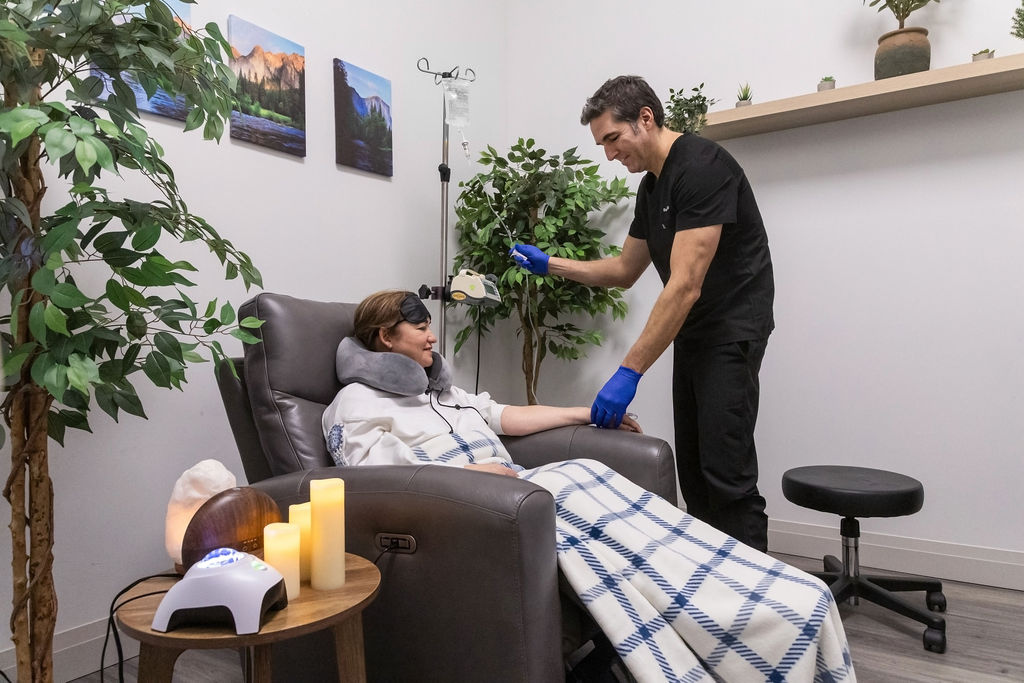
In 2026, IV ketamine therapy for depression got its first formal standard of care: a structured initial series, individualized dosing, monitored settings, and planned follow-up. Until this year, clinics built their own protocols individually, and the differences between them were wide.
This article walks through what the new guidelines recommend, why they focus specifically on intravenous treatment, and how those recommendations line up with how care is delivered at our Toronto-area clinic.
What are the ASKP3 guidelines?
The guidelines come from the American Society of Ketamine Physicians, Psychotherapists, and Practitioners, an interdisciplinary body known as ASKP3. They were published in the Journal of Affective Disorders in 2026, and they’re the first consensus standards of their kind for treating depression with IV ketamine.
An expert panel of psychiatrists, anesthesiologists, emergency physicians, and psychotherapists created the guidelines. They reviewed the existing evidence and rated every proposed statement anonymously, in rounds, until they either agreed or clearly didn’t.
The guidelines span seven areas:
- The evidence base
- Who is qualified to deliver treatment
- What a clinic setting must allow
- Psychiatric screening
- Medical screening
- The initial and maintenance treatment series
- Informed consent
You can read Dr. Sandhya Prashad’s summary in Psychiatric Times or ASKP3’s own standards page.
Why these guidelines are specific to IV ketamine therapy
The panel deliberately limited its recommendations to intravenous treatment, and the reason is evidence. IV is the most studied ketamine delivery route, and it’s the one with the strongest data behind it.
Part of that comes down to bioavailability, which is the share of a dose that actually reaches the bloodstream. IV ketamine is close to 100%. Intranasal sits somewhere around 45 to 50%, and oral is even lower and less predictable. An IV infusion also lets the physician adjust the dose during the session, which the other routes don’t allow.
That difference shows up in outcomes, not just absorption. A meta-analysis of head-to-head trials found IV ketamine outperformed intranasal esketamine on both efficacy and dropout rates.
The ASKP3 authors were clear that other routes, including intramuscular and sublingual, are used in practice and show promise, but the evidence base isn’t yet solid enough to guide them formally. So the recommendations that follow are written for IV, and shouldn’t be assumed to carry over to other methods.
How many sessions does treatment involve?
The panel recommends an initial series of four to six infusions over two to four weeks, typically starting at a low, weight-based dose. A single session isn’t a fair test of whether the treatment works for a given person.
Response tends to build across the series. Some people notice a shift within days of the first infusion. Others don’t feel much until the third or fourth. Judging things too early is one of the more common mistakes in this field.
What dose is used for depression?
Most treatment starts at 0.5 mg of ketamine per kilogram of body weight, then adjusts based on response.
The research points to a range rather than a single number. Fava and colleagues ran a dose-ranging trial across six academic sites and found clear effects at both 0.5 mg/kg and 1.0 mg/kg, with no consistent benefit below that.
Above 1 mg/kg, the evidence thins: a 2024 systematic review found higher doses didn’t reliably improve response, and the ASKP3 panel reached the same conclusion. Higher doses do tend to increase side effects, including nausea, blood pressure changes, and dissociation strong enough to be distressing.
Because body weight alone doesn’t predict how someone responds, the guidelines favour titrating to the individual over applying a fixed formula. Where a higher dose is used, it follows from a person’s demonstrated response and tolerability rather than a default assumption that more medicine helps.
Who should administer ketamine treatment?
The panel agreed that treatment should be administered by licensed medical professionals. It has to happen in a clinic capable of monitoring heart rate and breathing, with trained and experienced staff on hand.
They recommended genuine medical and psychiatric competence and a team rather than a single clinician working alone. They were also clear that ketamine shouldn’t be delivered as an infusion in isolation. It belongs inside a full psychiatric assessment, an ongoing treatment plan, and psychological support where appropriate.
Do patients need maintenance treatment?
Usually, yes. The panel recommends individualized follow-up at a lower frequency than the initial series.
Depression is often a recurring condition, and a course of ketamine doesn’t change that on its own. The initial series can create an opening; maintenance is what holds it. How often someone returns depends on how they’re doing rather than a fixed schedule, and many people gradually space sessions further apart over time. A need for maintenance says nothing about whether the first series worked. Recurring conditions across medicine are managed the same way.
How the guidelines line up with care at our clinic
| ASKP3 consensus (2026) | Ketamind Health | |
|---|---|---|
| Route | IV, as the best-studied method | IV infusions |
| Initial series | 4 to 6 infusions over 2 to 4 weeks | 6 infusions, up to twice weekly over 3 weeks |
| Starting dose | 0.5 mg/kg | 0.5 mg/kg, titrated to response |
| Setting | Must allow cardiorespiratory monitoring | CPSO Level 2 accredited, hospital-grade monitoring |
| Who’s present | Team-based, medical and psychiatric competence | Anesthesiologist (FRCPC) at every visit, plus nurses and therapy follow-up |
| Therapy | Recommended alongside treatment | Therapy sessions highly recommended |
| Maintenance | Individualized, less frequent | Individualized, less frequent |
Our full treatment process sets out each step, from intake through maintenance.
What should a referring clinician ask?
For any clinician deciding where to send a patient, these are reasonable questions to ask of any clinic:
- Is there an experienced physician present to administer treatment?
- Is the facility accredited, with medical monitoring during every session?
- Is there a trauma-informed care team, so patients receive individualised care during treatment?
- Do patients have therapeutic support built into the program?
- What follow-up is in place during and after the initial series?
At our clinic, we also coordinate with a patient’s existing therapists and prescribers, and with consent we’ll share progress and treatment planning directly.
What the new ketamine guidelines for depression mean for care
The 2026 ASKP3 guidelines reflect what good care looks like:
- An initial course of four to six infusions to give us a fair sense of whether treatment is helping, rather than deciding based on a single session.
- Maintenance is planned, and it can mean occasional follow-up infusions alongside therapy and the daily healthy habits that support mental health.
- A higher dose of ketamine doesn’t mean a better result, so we aim for the dose that works for you rather than the largest one.
For our team, the guidelines are reassuring. The care we provide is the care the evidence supports.
If you’d like to understand what a structured course of treatment looks like, you can book a no-cost consultation.
About the author: Dr. Darren Ezer is a specialist anesthesiologist and Fellow of the Royal College of Physicians and Surgeons of Canada, and the medical director of Ketamind Health in Markham, Ontario.