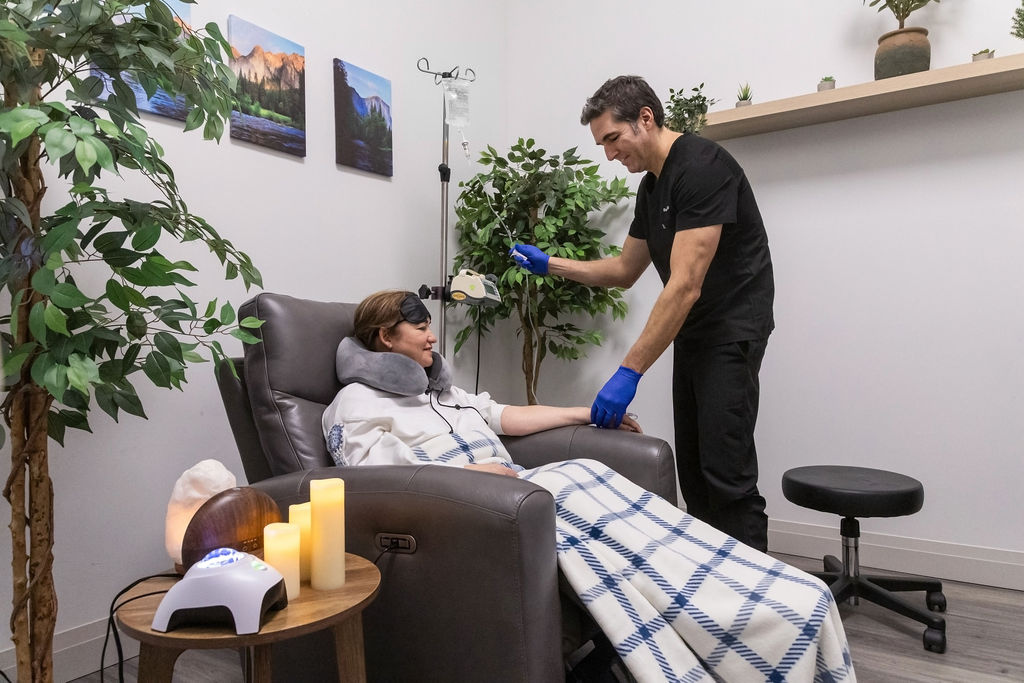
Psychedelic therapy in Ontario typically costs about $470 to $1,400 per medically administered session, or $2,820 to $8,400 for a series of six sessions.
The price depends on a number of factors, such as how the medicine is administered, the amount of medical monitoring required, and whether psychotherapy is incorporated in the treatment. This guide explains why the price can vary, what may be included, and how to understand the total cost before starting treatment.
The treatment discussed in this article is ketamine therapy, which Health Canada has approved as an anesthetic. It can be legally prescribed by a physician off-label for depression, PTSD, and anxiety.
Key Takeaways
- IV psychedelic therapy in Ontario typically costs about $470 to $1,100 per medically administered session, with a six-session series around $2,820 to $6,600.
- Psychedelic-assisted therapy is $685 to $1,400 per session. It can cost more due to preparation and integration sessions which add extra time from a therapist.
- For depression, IV treatment has the strongest comparative evidence of any delivery method, with fewer treatments needed to reach remission, greater overall efficacy and more durable maintenance benefit.
- Route of administration, physician presence, medical monitoring, supportive medications, IV fluids, therapist time, facility requirements, and clinic overhead all affect the cost of treatment.
What affects the cost of psychedelic therapy in Ontario?
The term “psychedelic therapy” can be applied to several treatment models. Prices vary because the medicine can be administered in different ways, with different levels of physician oversight and monitoring.
Several factors can affect the cost, as indicated below:
The type of treatment: psychedelic therapy versus psychedelic-assisted therapy
Medically administered psychedelic therapy in Ontario is overseen by a physician and includes medical monitoring throughout treatment. Therapy may be part of the overall care plan, but it is usually less intensive than with a psychedelic-assisted therapy program.
The cost range can be wide because the term “psychedelic therapy” covers two different models. Medically administered IV treatment is about $470 to $1,100 per session, or $2,820 to $6,600 for six sessions. Psychedelic-assisted therapy, which builds psychotherapy into the treatment, is about $685 to $1,400 per session, or $4,100 to $8,400 for six sessions.
Psychedelic-assisted therapy typically includes more hours of psychotherapy, which can take place before, during, and after the medicine session, including preparation and integration. While prices can vary depending on the therapist’s hours, it is often more expensive than a medically focused IV psychedelic treatment.
The route of administration
Psychedelic therapy can be given through several routes of administration, including intravenous, intramuscular injection, sublingual, oral, and intranasal. The route affects how the medicine is absorbed, how closely the dose can be controlled, the level of medical monitoring needed, and the overall cost of treatment.
IV delivery usually requires more medical infrastructure because the medicine is delivered directly into the bloodstream and the dose can be precisely adjusted during treatment.
IV psychedelic therapy has an important clinical advantage. A systematic review of 24 randomized trials in 1,877 people, published in the Journal of Affective Disorders, found greater response and remission rates with IV than with intranasal treatment.
An observational study in the Journal of Clinical Psychiatry found that people receiving IV needed fewer treatments to reach remission than people receiving intranasal treatment. More recent maintenance research reported longer intervals between treatments with IV, supporting more durable benefits.
Physician presence during treatment
Not all psychedelic therapy treatment is administered by a physician. When a doctor is physically present in the clinic and is directly involved throughout the session, it can affect the overall cost.
A physician can immediately address any issues or side effects that arise, optimize the treatment during the session, and provide any additional medications that may be needed.
The level of medical monitoring
The amount of monitoring during the session can also influence the treatment cost. Continuous monitoring of blood pressure, heart rate, and oxygen saturation requires equipment and trained medical team members throughout the treatment.
Treatment length and therapist time
Treatment length can affect the cost. A longer session may use more treatment-room time, more medication, more hours from medical team members, and more therapist time, if one is present.
Supportive medications and IV fluids
Some people need other medicine alongside psychedelic medicine. This could include medication for nausea, a blood-pressure change, or anxiety. Additional IV fluids, minerals, or saline can also be provided during the treatment.
Some clinics include clinically appropriate supportive medications and fluids in the treatment fee. Others charge separately.
This difference may only become apparent after treatment has started, so it could be an important point to clarify before the first session.
Preparation, therapist time and integration
Preparation and integration therapy may be included in the treatment plan, or these could be a separate charge not included with a medically administered IV session.
Private psychotherapy in Ontario is commonly billed at $150 to $300 per hour, depending on the professional and service. Adding preparation, therapist support, or integration can increase the total treatment cost beyond the price of the medicine session.
Facility and accreditation
In Ontario, all IV treatments and other psychedelic therapy treatments over a certain dosage need to be provided in a clinic with medical accreditation. The College of Physicians and Surgeons of Ontario (CPSO) sets Out-of-Hospital Premises standards that clinics must meet to be able to provide this treatment.
It is reasonable to ask a clinic if it is medically accredited by the CPSO, as this can mean that a clinic has to meet strict safety standards.
Private treatment rooms, physiological monitors, emergency medication and equipment, and regulated support personnel can all play a role in the overall treatment cost.
Clinic experience and care coordination
Experience does not automatically justify a higher price, but it can affect how a clinic structures treatment. More established clinics may include outcome tracking, communication with other treating professionals, follow-up planning and protocols for managing common treatment-day issues.
Clinic location and overhead
Rent, personnel and medical supply costs vary across Ontario. Toronto and the GTA can carry higher operating costs than smaller markets and can affect the final price of treatment.
What is included in the cost of psychedelic therapy in Ontario?
Depending on the clinic and treatment model, the cost of psychedelic therapy may include:
-
- Medical and mental-health assessment
-
- Treatment planning
-
- Medicine administration
-
- In-clinic physician oversight
-
- Clinical monitoring
-
- Treatment-room time
-
- Supportive medications or IV fluids when clinically appropriate
-
- Preparation or integration therapy
-
- Follow-up and outcome tracking
As clinics package these services differently, it is important to confirm what is included before starting treatment.
What does untreated depression cost?
The cost of depression, PTSD or anxiety is not limited to healthcare. Persistent symptoms can also affect income, work performance, relationships and everyday functioning.
For some people, these costs build over time through missed work and repeated treatment trials.
Ongoing symptoms affect family and daily life. TELUS Health’s 2023 Mental Health Index indicated that Canadian workers diagnosed with depression lose about 56 working days of productivity a year, counting both days missed and days worked below capacity. That is more than eleven working weeks.
There are also costs that are hard to put a price on, such as lost relationships, lack of connection, social withdrawal, and the inability to be present and engaged with life.
The cost over time of persistent symptoms can therefore become substantial. It’s reasonable to consider the cost of ongoing illness together with the cost of treatment.
Is psychedelic therapy worth the cost?
Psychedelic therapy delivers meaningful and measurable value. In a randomized trial of 403 people with treatment-resistant depression, published in the New England Journal of Medicine, 55% responded to IV psychedelic treatment compared with 41% who received electroconvulsive therapy, which was previously considered to be the gold standard for depression treatment. The IV group also had fewer effects on memory compared to ECT.
The cost is most likely to be justified for a few groups of people in particular:
-
- People whose current treatment isn’t doing enough. Symptoms can affect daily life well before someone formally meets treatment-resistant criteria, and many people in that position haven’t found enough benefit from medication.
-
- People who need fast results. Antidepressants can take weeks to months to show whether they’re working. Psychedelic therapy works on a much shorter timeline.
-
- People looking for change rather than symptom management. Treatment appears to open a period when the brain can let go of unhealthy patterns and create new ways of thinking.
-
- People treating depression, PTSD or anxiety. An international pooled analysis of 17 randomized trials of IV treatment covering 809 people found it reduced depressive symptoms across a wide range of people, even in those who had not responded to previous medications.
If your current approach isn’t giving you the quality of life you need, the cost of treatment is more likely to be justified.
Is psychedelic therapy covered by OHIP?
OHIP doesn’t cover psychedelic therapy for mental health at this time.
Does private insurance cover psychedelic therapy?
A portion of the treatment may be covered depending on your plan:
-
- Extended health plans often cover therapy delivered by a licensed mental health professional, including preparation and integration sessions.
-
- The psychedelic medicine sessions are usually an out-of-pocket expense; however, they may be partially covered by some insurance plans.
-
- Some people have Health Spending Accounts (HSAs) or Wellness Spending Accounts through their employers, which may cover the cost of treatment.
Where a plan does cover the cost of the medication under a drug benefit, the administration and monitoring are usually still not covered.
Always check with your insurance provider to see what they may cover.
Does Veterans Affairs Canada (VAC) cover psychedelic therapy for veterans?
Veterans Affairs Canada may cover some forms of psychedelic therapy for eligible military veterans who meet the criteria to begin treatment.
Approval requires documentation, and a clinic experienced with VAC can prepare the necessary documentation to submit.
First responders should ask about coverage as well. It varies by employer, and a clinic can provide information for the insurance company to review.
Can psychedelic therapy be more affordable in Ontario?
Several options can reduce what you pay out of pocket:
-
- Many clinics work with financing companies to help break the cost of treatment into affordable monthly payments. Eligible applicants may be able to access 0% interest terms with no early-repayment penalties. The full treatment or a portion of it can be financed.
-
- Some clinics may divide the cost of a series into payments directly rather than through a lender. Policies vary, so ask at your consultation.
Can psychedelic therapy be claimed as a medical expense in Canada?
Physician-administered or prescribed ketamine therapy generally qualifies for the Medical Expense Tax Credit (METC) under federal tax guidelines, provided the costs are paid to licensed medical practitioners or clinics and are not reimbursed by private insurance.
You can claim these out-of-pocket medical expenses through the Canada Revenue Agency on your tax return. The credit applies to eligible expenses above a yearly threshold, which is the lesser of 3% of your net income or a fixed amount set each year. A full series of treatment usually exceeds that threshold.
Questions to ask a clinic about psychedelic therapy pricing
-
- Is this medical psychedelic therapy or psychedelic-assisted therapy?
-
- Which route of administration is used?
-
- How many treatment sessions are included?
-
- Who administers the treatment?
-
- Is a physician physically present in the clinic?
-
- Can the medicine be adjusted during the session?
-
- What medical monitoring is included?
-
- Are supportive medications or IV fluids included when clinically appropriate?
-
- Are preparation, therapist support, and integration included?
-
- What safety measures are in place during the session?
-
- What support will I have during the session?
-
- What is the treatment environment like?
Frequently Asked Questions
How much is ketamine therapy near me in Ontario?
Price depends on the clinic, the route of administration, and how much medical oversight is included. Across the Greater Toronto Area, medically administered IV treatment is $470 to $1,100 per session, while psychedelic-assisted therapy with more therapist time is $685 to $1,400 per session. Booking a consultation is usually the fastest way to understand the costs.
Are there additional costs beyond the treatment fee?
Some clinics are all-inclusive, whereas others may charge separately for additional therapy time or the administration of additional medications.
Psychedelic therapy at Ketamind Health in Markham
Ketamind Health provides physician-led, medically supervised IV psychedelic therapy from its Markham clinic for people from Toronto and across the Greater Toronto Area.
Care is directed by Dr. Darren Ezer, an anesthesiologist with more than 20 years of clinical experience. Treatment is administered by a physician with medical monitoring in private treatment rooms, and a trauma-informed care team is available to provide supportive care during the sessions.
The clinic is a CPSO-accredited Level 2 medical facility subject to the highest medical safety standards for an Out-of-Hospital Premises.
Since 2019, the Ketamind Health team has delivered more than 15,000 infusions to over 3,000 people.
Want to understand what your treatment would cost?
Speak with the Ketamind Health team during a complimentary consultation. We can walk you through the treatment model and the costs in detail. You can also visit our financing page to learn more
Medical and regulatory note
Psychedelic medicines are regulated differently in Canada, and legal access depends on the medicine indication and treatment pathway. Some forms of psychedelic-assisted therapy are available only through limited pathways such as clinical trials or Health Canada’s Special Access Program.
Ketamine is a controlled substance under Schedule I of the Controlled Drugs and Substances Act. It is legally available when prescribed by a physician. Prescribing standards are set by the provincial college, which in Ontario is the CPSO.
This article is for general education and does not replace a medical assessment, insurance advice, financial advice, or tax advice. Psychedelic therapy is not appropriate for everyone. Prices, benefit plans, legal access and treatment availability can change, so confirm current information directly with the clinic.
Authors | Last Updated October 15, 2026
Sources
-
- Bahji, Vazquez and Zarate. Comparative efficacy of racemic ketamine and esketamine for depression: a systematic review and meta-analysis. Journal of Affective Disorders, 2021;278:542–555. pubmed.ncbi.nlm.nih.gov/33022440
-
- Singh and colleagues. Comparative effectiveness of intravenous ketamine and intranasal esketamine in clinical practice among patients with treatment-refractory depression: an observational study. Journal of Clinical Psychiatry, 2023;84(2). psychiatrist.com
-
- Long-term outcomes in patients with treatment-refractory depression receiving intravenous ketamine and intranasal esketamine: an observational study. Journal of Clinical Psychiatry, 2025. pubmed.ncbi.nlm.nih.gov/40767785
-
- Anand and colleagues. Ketamine versus ECT for nonpsychotic treatment-resistant major depression. New England Journal of Medicine, 2023;388:2315–2325. pubmed.ncbi.nlm.nih.gov/37224232
-
- Feder and colleagues. A randomized controlled trial of repeated ketamine administration for chronic posttraumatic stress disorder. American Journal of Psychiatry, 2021;178:193–202. pubmed.ncbi.nlm.nih.gov/33472357
-
- College of Physicians and Surgeons of Ontario. Out-of-Hospital Premises Inspection Program and Drugs and Equipment Standard. cpso.on.ca
-
- Canada Revenue Agency. Lines 33099 and 33199 – Eligible medical expenses you can claim on your tax return. canada.ca
-
- Government of Canada. Controlled Drugs and Substances Act, S.C. 1996, c. 19. laws-lois.justice.gc.ca
-
- Canadian Medical Protective Association. Off-label use of drugs and medical devices: managing the medico-legal risks, 2026. cmpa-acpm.ca
-
- TELUS Health Mental Health Index, Canada, October 2023, as reported by Canadian HR Reporter, November 2023. hrreporter.com