A randomized Ontario trial published in JAMA Psychiatry in September 2026 is one of the strongest controlled trials so far in people with bipolar I and bipolar II depression. The Ket-BD trial showed that adults with treatment-resistant bipolar depression improved more than those who received a placebo-like comparison.
This article explains treatment-resistant bipolar depression and how IV psychedelic therapy works. It also looks at what the Ket-BD trial and earlier studies found and what this means for anyone considering psychedelic therapy for bipolar depression.
The Bipolar Depression Study
- IV psychedelic therapy lowered depression scores more than an active placebo in adults whose bipolar depression had not improved after at least two treatments.
- No one in the 2026 Ontario trial developed mania, hypomania, or psychosis.
- About 1 in 3 people responded in the 2026 Ontario trial, close to three times the placebo rate.
What Is Treatment-Resistant Bipolar Depression?
Treatment-resistant bipolar depression is a depressive episode in bipolar disorder that has not improved enough after treatment. Symptoms can include persistent sadness, little interest or pleasure in things a person normally enjoys, and fatigue. People can also experience changes in sleep or appetite, difficulty concentrating, and trouble managing everyday responsibilities.
The limited number of treatment options for bipolar depression makes it difficult to find an approach that is effective and tolerable over the long term.
Why Bipolar Depression is Hard to Treat?
Most people with bipolar disorder spend far more time depressed than manic, yet Health Canada has approved only a few medications for bipolar depression. Most are atypical antipsychotics, and side effects such as weight gain, metabolic changes and restlessness lead some people to stop taking medication.
Treatment also has to avoid triggering mania. Antidepressants that work for major depression can cause a switch into mania or hypomania, so Canadian guidelines advise against using an antidepressant on its own in bipolar I. For the same reason, people with bipolar disorder have often been left out of trials of new depression treatments.
Economic factors also limit options. Bipolar depression affects fewer people than major depression, and because symptoms can improve on their own, people taking a placebo in clinical trials often improve too. This makes it harder to show that a new treatment works better.
A smaller market and a higher chance of a failed trial make companies less likely to invest in this area. As a result, few new treatments have been studied, which makes this new Ontario trial important: it reduced depression and found no cases of mania.
What Did the 2026 Ontario Bipolar Depression Trial (Ket-BD) Find?
The Ket-BD study was a double-blind, randomized clinical trial led by researchers at the University Health Network in Toronto, which took place at three sites in Ontario. The article was published in JAMA Psychiatry in September 2026.
- Who took part: adults aged 21 to 65 with bipolar I or II disorder in a moderate to severe depressive episode, who had already tried at least two medications without enough improvement.
- Treatment: four 40-minute IV infusions over two weeks, of either the study medicine or a sedative used as an active placebo. The sedative produces short-term effects of its own, which makes it harder for participants to tell which treatment they received.
- Alongside usual care: everyone stayed on their mood stabilizer or antipsychotic, so the infusions were tested as an added treatment, not a replacement.
- Main measure: the change in depression score from the start of treatment to day 14, using the Montgomery-Åsberg Depression Rating Scale (MADRS). The MADRS is a standard scale clinicians use to rate depression severity, and a higher score means more severe symptoms
At day 14, depression scores had fallen 7.3 points further on the Montgomery-Åsberg Depression Rating Scale (MADRS) in the psychedelic therapy IV group than in the placebo group, which the researchers reported as statistically significant (Orsini et al., JAMA Psychiatry, 2026).
About 35% of participants who received the active IV treatment met the trial’s definition of response, compared to about 12% on placebo,. Remission rate for psychedelic therapy were 18% versus 9% for the placebo. For a study of bipolar depression, that is a strong result. Just as important a finding is that no one in either group developed mania, hypomania, or psychosis.
“Currently available treatments are often ineffective for treatment-resistant bipolar depression, with new treatments urgently needed,” said Dr. Joshua Rosenblat, Associate Professor of Psychiatry at the University of Toronto.
Dr. Rosenblat states that IV psychedelic therapy is a reasonable second-line option when other bipolar depression treatments haven’t been effective.
What Did Earlier Studies of Bipolar Depression Find?
Several smaller controlled studies, starting more than a decade before Ket-BD, found antidepressant improvement in a proportion of people with bipolar depression.
One of the first randomized studies, published in 2010, included 18 people with treatment-resistant bipolar depression who stayed on mood-stabilizing medication. About 71% met the response criteria at some point after active psychedelic therapy, compared with about 6% after placebo. A second controlled study, published in 2012 with 15 participants, also found rapid improvement.
A 2023 systematic review by Toronto researchers examined eight studies with 235 participants. Across those studies, about 48% of participants receiving active psychedelic treatment responded, meaning their depression scores fell by at least half, compared with about 5% on placebo.
The studies differed in size, design, treatment schedule and patient population; however, they support the findings of the most recent Ket-BD study.
Can IV Psychedelic Therapy Cause Mania in Bipolar Disorder?
Mania and hypomania have been uncommon during treatment in published IV studies, but there is still a theoretical risk.
In the Ket-BD trial, one participant in each group had brief mixed symptoms that did not meet the criteria for a manic or hypomanic episode.
In the 2023 review of 235 participants, about 2% developed manic or hypomanic symptoms (Fancy et al., Therapeutic Advances in Psychopharmacology, 2023). The review’s authors compared this with the 3% to 10% rate of manic switching reported with traditional antidepressants and placebo.
How Strong Is the Evidence for IV Psychedelic Therapy in Bipolar Depression?
While the evidence is promising, the trials to date for treating bipolar depression with IV psychedelic therapy have been small. They therefore can’t tell us how large the effect is across a broad population, or which patients are most likely to benefit. Larger trials are needed to strengthen the evidence for psychedelic therapy in bipolar depression.
The Ket-BD trial used a sedative medication as its placebo. This produces some drowsiness, but it can’t reproduce the dissociation that people receiving the active psychedelic treatment may experience.
This means a trial like this can never be completely blind. In the Ket-BD study, about 47% of participants guessed their treatment correctly after the first infusion, which is consistent with what is typically seen in a blinded study. This remains a limitation, as someone who believes they received the active treatment may rate their mood differently than someone who believes they received the placebo.
Is IV Psychedelic Therapy a Replacement for Bipolar Medication?
The bipolar depression studies tested IV treatment in addition to mood-stabilizing medications. The research does not support stopping antipsychotics, mood stabilizers, or any other prescribed medication when starting psychedelic therapy treatment for bipolar depression.
Is IV Psychedelic Therapy Approved for Bipolar Depression in Canada?
The medicine used in IV psychedelic therapy is approved by Health Canada and has been used in hospitals for decades. Physicians in Canada can legally prescribe approved medications for conditions not listed on the label, which is called off-label use. This is common, accepted practice: about one in ten prescriptions in Canada is written off-label.
So while IV psychedelic therapy is not specifically approved for bipolar disorder, it can legally and safely be provided in a controlled medical environment to help improve the symptoms of bipolar depression.
Who Is a Candidate for IV Psychedelic Therapy for Bipolar Depression?
Eligibility is decided through a medical assessment, which includes looking at factors such as:
-
confirmation of the bipolar diagnosis
-
ensuring no contraindications are present
-
previous treatments
-
history of mania or hypomania
-
current medications
-
cardiovascular health
-
other medical conditions
What Bipolar Depression Treatments Are Available in Toronto and Ontario?
In Toronto and across Ontario, people with bipolar depression can get care through psychiatrists, family physicians, hospital mood-disorder programs, psychotherapists and private mental-health clinics.
Medically supervised IV psychedelic therapy is available through private clinics in Ontario.
The Ket-BD trial was run at three Ontario sites, so some of the newest evidence in this area comes from Canada.
Where Can I Learn More About IV Psychedelic Therapy Near Toronto?
Ketamind Health provides physician-administered IV psychedelic therapy at its Markham clinic for patients from Toronto, York Region and across the Greater Toronto Area. Care is directed by Dr. Darren Ezer, MD, FRCPC, an anesthesiologist and Medical Director.
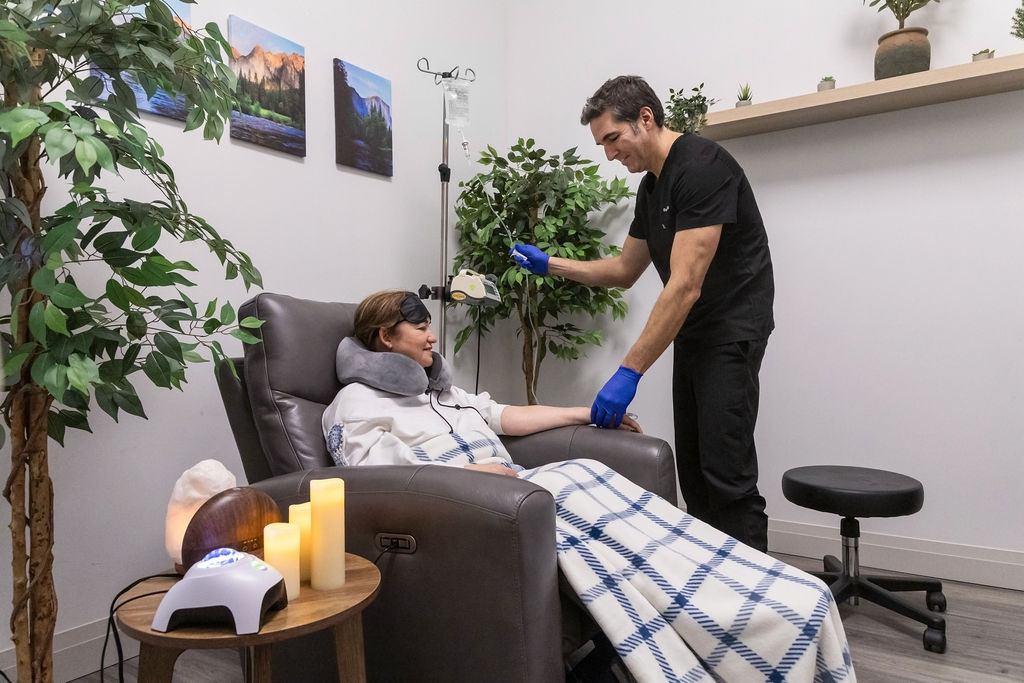
IV psychedelic therapy sessions take place in private treatment rooms with medical monitoring. For someone with bipolar disorder, communication with the healthcare professional who manages their ongoing bipolar care is particularly important.
Is IV Psychedelic Therapy Covered by OHIP?
Private IV psychedelic therapy for bipolar depression is typically not covered by OHIP.
Should You Consider Psychedelic Therapy for Bipolar Depression?
The 2026 Ontario randomized trial shows that some people with difficult-to-treat bipolar depression can improve fairly quickly with psychedelic therapy.
Expectations still need to be realistic, because researchers cannot yet predict who will benefit most.
In a condition with relatively few treatment choices, this gives patients and clinicians another treatment option.
Considering Bipolar Depression Treatment in Toronto or the GTA?
If you are living with bipolar depression and want to know whether medically supervised IV psychedelic therapy may be appropriate for you, a consultation with the Ketamind Health care team covers screening, eligibility and what treatment involves.
Frequently Asked Questions About IV Psychedelic Therapy for Bipolar Depression
Is IV psychedelic therapy safe for people with bipolar disorder?
From what we know at the time of this post, IV psychedelic therapy administered under the supervision of a physician in a controlled clinic is safe for major depressive disorder. Assuming the patient is on a mood stablizer during treatment, it does not significantly increase the risk of mania in patients with bipolar disorder.
Can I keep taking lithium or a mood stabilizer during IV psychedelic therapy?
Yes. In the bipolar depression studies, participants stayed on their mood stabilizer or antipsychotic throughout treatment. Any change to bipolar medication should be discussed with a healthcare professional.
How many IV sessions are used for bipolar depression?
Treatment typically starts with 6 sessions, and maintenance infusions are often required to sustain the benefits.
How soon can someone with bipolar depression feel better?
Some participants in earlier studies improved within hours or days. However, when people improve, it is usually noticed somewhere between the fourth to the sixth infusion.
Sources
- Orsini DK, Di Luch S, Rosenblat JD, et al. Ket-BD randomized clinical trial in treatment-resistant bipolar depression. JAMA Psychiatry. Published September 2, 2026. JAMA Psychiatry
- Fancy F, Haikazian S, Johnson DE, et al. Updated systematic review of the medicine in bipolar depression. Therapeutic Advances in Psychopharmacology. 2023. SAGE Journals
- Diazgranados N, Ibrahim L, Brutsche NE, et al. Randomized add-on trial in treatment-resistant bipolar depression. Archives of General Psychiatry. 2010;67(8):793-802. JAMA Network
- Zarate CA Jr, Brutsche NE, Ibrahim L, et al. Replication trial in treatment-resistant bipolar depression. Biological Psychiatry. 2012;71(11):939-946. PubMed
- Hospital News. A new avenue for bipolar depression. 2026. Hospital News
Medical Review
Medically reviewed by Dr. Darren Ezer, MD, FRCPC, Anesthesiologist and Medical Director, Ketamind Health.
Medical Disclaimer
This article is for educational purposes only and does not provide medical advice, diagnosis, or individualized treatment recommendations.
Bipolar disorder requires medical and psychiatric assessment. Do not start, stop or change a mood stabilizer, antipsychotic or other prescribed medication based on information in this article.
If you are experiencing suicidal thoughts, mania, psychosis or another mental-health emergency, seek urgent medical attention. In Canada, call or text 9-8-8 for suicide crisis support, call 911 in an immediate emergency or go to the nearest emergency department.