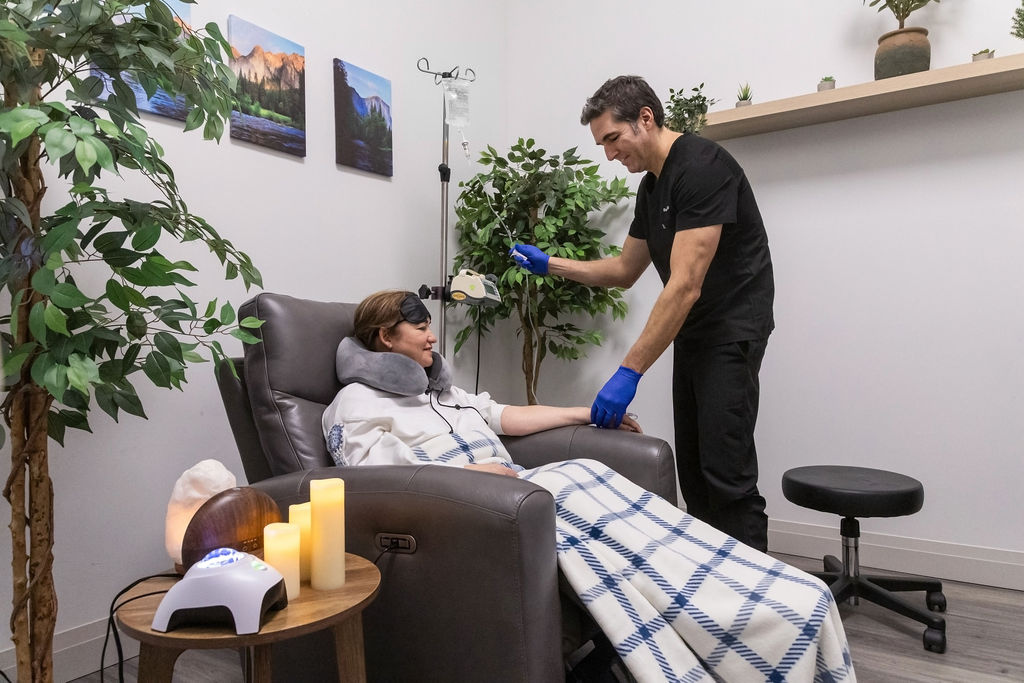
Over the past few years, ketamine infusion therapy has come up more often in conversations around depression, especially for people who haven’t responded to standard treatments.
From a clinical standpoint, that interest makes sense. We’re seeing more patients who have tried multiple medications without getting where they want to be, and naturally, they start looking into other options.
In cities like Toronto, there’s been growing interest in alternative mental health treatment approaches, particularly when these are delivered in structured, medically supervised settings.
At the same time, the research is still catching up. What’s helpful now is that newer studies are starting to give us a clearer picture of what’s actually happening in the brain, and just as importantly, what may or may not matter in terms of outcomes.
How Ketamine Works in the Brain, What New Research Shows

One of the more interesting developments comes from a recent study published in Molecular Psychiatry in 2026, which looked at how ketamine affects specific receptors in the brain.
You can read the study by clickinghere.
The focus was on AMPA receptors, which are part of the brain’s glutamate system. This system plays a central role in how brain cells communicate, adapt, and form new connections over time.
What makes this study particularly compelling is that researchers didn’t just look at symptoms; they used brain imaging to examine what was actually happening at a biological level.
They found that patterns of AMPA receptor activity before treatment appeared to predict how individuals responded in a clinical setting. After treatment, measurable changes in these systems were associated with improvements in depressive symptoms.
In other words, this isn’t just theoretical. We’re starting to see objective changes in the brain that line up with how people feel.
From a clinical perspective, that’s an important shift. For a long time, mental health treatments have relied heavily on subjective reporting. What’s emerging here is evidence that this approach may influence underlying brain function in a way that can actually be observed and measured.
It also helps explain why responses can vary. Not everyone starts from the same baseline, and those differences may play a role in who benefits most.
What’s exciting about this line of research is that it moves the conversation beyond theory. We’re no longer just asking whether it works; we’re starting to understand how it works in the brain.
Ketamine, Neuroplasticity, and Why It Matters for Depression
You’ll often hear the term neuroplasticity in these discussions. In simple terms, it refers to the brain’s ability to change and reorganize itself.
Ketamine appears to increase activity in the glutamate system, which then leads to the release of BDNF, a protein involved in building and strengthening connections between neurons. What this may do is create a temporary period where the brain is more flexible.
For someone dealing with depression, that matters. A lot of the difficulty comes from patterns that feel stuck. When the brain becomes more adaptable, it can make it easier to shift those patterns, especially when combined with therapy or other supports.
Why Ketamine May Work Faster Than Traditional Antidepressants
Another reason this treatment has gained attention is how quickly changes can happen for some people.
Traditional antidepressants often take weeks before there’s a noticeable effect. With ketamine, the timeline can look different in certain cases.
That doesn’t mean it works immediately or for everyone, but the shorter timeframe is something both researchers and clinicians have been trying to understand.
Is the Ketamine Experience Necessary for Results?
A common assumption is that the experience itself is what drives the benefit. But newer research suggests that may not be the case. A study from King’s College London looked at whether the intensity of the experience predicted outcomes, and it didn’t seem to. You can read more by clickinghere.
Some people had noticeable experiences, others very little, but outcomes were similar. From a clinical perspective, that’s consistent with what we see.
Is This Type of Treatment Legal in Canada?
In Canada, ketamine is a regulated medication and is used in controlled clinical settings under appropriate medical supervision.
It’s often discussed as part of a broader approach known as psychedelic-assisted therapy, which focuses on how care is delivered within a structured and supportive environment.
This typically includes careful screening, medical supervision, and follow-up support.
What This Means for People Exploring Treatment Options in Toronto

From a clinical point of view, it’s important to recognize that this type of treatment does not work for everyone. Response can vary, and careful assessment is essential.
For some individuals, in the right setting and with the right support, it can be a meaningful, and in some cases, life-changing part of treatment. But it is not a universal solution.
For people exploring options in Toronto, the key is understanding where this approach fits within a broader plan of care.
About the Author
Dr. Darren Ezer is a physician at Ketamind Health specializing in anesthesiology and interventional pain medicine, with a focus on infusion-based treatments for mental health conditions, including treatment-resistant depression. Originally trained in family medicine, he went on to complete specialty training in anesthesiology at the University of Toronto.
He brings over 20 years of clinical experience in patient care, procedural medicine, and complex case management. Dr. Ezer has overseen more than 15,000 medically supervised infusions and has extensive experience in monitoring, safety, and individualized treatment delivery.
He is a Fellow of the Royal College of Physicians and Surgeons of Canada and serves as an Associate Professor at Toronto Metropolitan University’s medical school, where he is involved in both teaching and research related to emerging treatment approaches in mental health and chronic pain.
His work focuses on delivering structured, medically supervised care while helping patients navigate treatment options in a safe and evidence-informed way.